

Chris Wood on Writing the Roadless Rule and Why It Still Matters
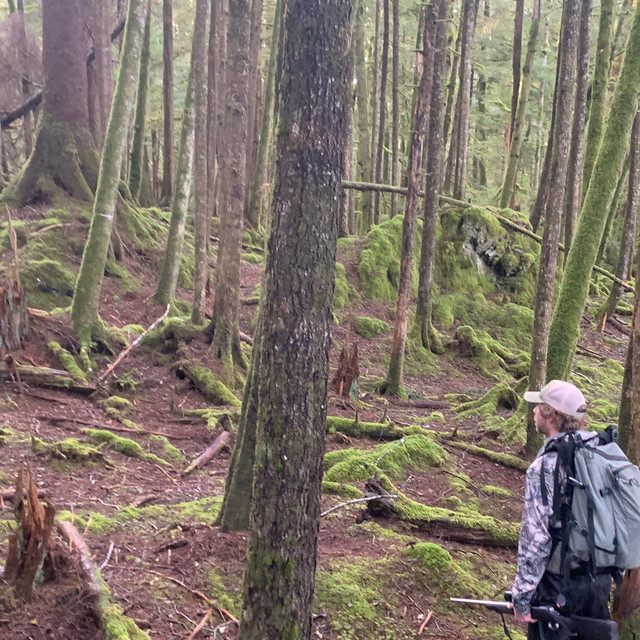
Chris Wood is the CEO of Trout Unlimited and one of the architects of the 2001 Roadless Rule. He wrote it while working for Forest Service Chief Mike Dombeck from 1997 to 2001, and the rule protected 58.5 million acres of national forest, including the Tongass. He's a New Jersey kid who became a conservationist after a confused afternoon on the Anchor River near Homer, and he still fishes Bristol Bay every year. I grew up on Prince of Wales Island during the logging years, so I talked with Chris about how the rule really started with a road maintenance backlog, why the Tongass was added, what we learned about buffer strips and beauty strips, the current push to roll the rule back, and why he thinks short passes beat a long ball.
4 Key Moments
1. It started with a roads rule
Few people remember that the Roadless Rule grew out of an $8.6 billion maintenance backlog on existing Forest Service roads. Congress came within a single vote of gutting the road budget. So the agency first put an 18-month moratorium on new roads. The public comments that followed made clear what people valued in these places.
"It's the height of conservatism not to make new investments until you can take care of the investments you've already made."
2. Adding the Tongass
The draft rule in 2000 left out the Tongass and the Chugach. Public comment changed that. Chris points out that more than 70 percent of Southeast Alaska's Chinook, coho and chum, and about 85 percent of its sockeye, come from roadless areas.
"Why wouldn't we act to protect the best of what remains before it's lost?"
3. From beauty strips to buffers
I remember rivers on Prince of Wales that looked dead after creek-edge-to-creek-edge logging, and we never fished them. Chris explained that the Forest Service once left "beauty strips" so passing cruise ships wouldn't see the clearcuts. Now we know streams need wood falling in, which takes buffers of hundreds of feet.
"When you lose the habitat, you lose the fish. I mean, it's not any more complicated than that."
4. Losing money on every sale
Chris says every timber sale proposed in a roadless area, in Alaska or the Lower 48, was appealed, litigated and delayed. Taxpayers spent more getting in than the low-value, high-elevation timber was worth. He wants a rule that keeps the protections, uses 25 years of lessons and gives mills a workable path through many local agreements.
"They're trying to throw a long ball. But what we need is a lot of short passes to move the ball down the field."
Transcript
Lund: All right, Chris, welcome to the podcast. Thanks for being on here.
Wood: Hey, Jeff, it's great to be with you.
Lund: You have some background with the roadless rule. Were you part of the actual writing of it?
Wood: I was, yes. I worked for a man by the name of Mike Dombeck, who was the chief from 1997 to 2001, and this was one of our seminal accomplishments: protecting 58 and a half million acres of these so-called roadless areas across the National Forest System.
Lund: I'm more familiar with the Tongass portion of that, the Tongass National Forest. So we've got a couple of dates here. The Tongass National Forest was created in 1907. A 50-year contract to log a portion of it was awarded in 1947, and in those 50 years, until 1997, a tremendous amount of logging was done. Over a million acres of Tongass old growth was logged during that time. If you go back 100 years, almost half of the 5 million acres of old growth have been logged. The roadless rule went into effect in 2001, and then it was reinstated in 2023. Well, actually, we're going a little out of order. What was the attitude or the temperature about conservation back when it was being written? How was the reception?
Wood: It's such a good question, Jeff. The way the roadless rule really started was that the Forest Service was carrying about an $8.6 billion, with a B, maintenance backlog on its existing road system. And the House of Representatives and the Senate came within a single vote, one person's vote, of eliminating 80 percent of the Forest Service road budget, including road maintenance and reconstruction. They were doing that as a surrogate to try to get the agency to stop building roads into these so-called roadless areas. And in Alaska, you did a really good job of summarizing the 50-year timber contract that expired and left people scratching their heads and wondering what's next.
So what we did initially at the Forest Service, before the roadless rule existed, was a rulemaking that would let us get a handle on how to take care of the existing road system. Very few people know that before the roadless rule, we actually did a roads rule. And part of that roads rule was a moratorium on all new road construction anywhere on the National Forest System, including in heavily logged and roaded areas, for 18 months. Once we did that, people made it very, very clear. These are lands owned by the American people, and the American people made clear in no uncertain terms that the values they cared about from these public lands, and especially these so-called roadless areas, were the sense of naturalness they provide, the wildness and the recreation opportunities. Oh, and yes, they're important for commodities, but only to the extent that developing those commodities doesn't harm the ecological sustainability of the system. It was that aha moment that led us to look at roadless areas on their own merit.
Another fact a lot of people have forgotten is that the draft rule that came out back in 2000 didn't actually include the Tongass or the Chugach. You're talking about 17 million acres there. And it's the Tongass that's more important, both from a fisheries perspective and because Southeast Alaska was the area hit hardest by the logging you mentioned. It was in response to those public comments that we said, okay, in the final rule, the Tongass will be included. Why wouldn't we act to protect the best of what remains before it's lost? If you look at the value of those Tongass roadless areas in the Southeast, you're talking about 9 million or so of the 16 or 17 million acres on the Tongass that are roadless. More than 70 percent of all the Southeast Alaska Chinook and coho and chum populations come from roadless areas. It's in the mid-80s, 85 percent or more, of all Southeast sockeye populations. So these lands are incredibly important from a fisheries perspective, because roads have a tendency, especially in rugged climates, to change things. Gravity works cheap, and it never takes a day off.
Lund: Right. You build a road on a hillside, and it's going to want to fall into the creek below it eventually.
Wood: Yeah. And that's what happened with a lot of the roads that were connected to the Louisiana-Pacific contract you mentioned at the start. That's what we were responding to.
Lund: I remember being in middle school when some of my buddies had to move away. I grew up on Prince of Wales Island, so not necessarily the epicenter, but definitely kind of an epicenter for the contention. I was young, living in kind of a logging community, even though Klawock was predominantly Native, and there was this idea that logging was just done. Some of the people had moved up from Oregon as loggers because of the spotted owl issue. I wouldn't say it was anti-conservation. Again, I'm thinking back to my middle school and high school days, and I wasn't really paying attention. It was mostly sports and girls and whatnot.
Wood: You got started faster than me, if you were looking at girls.
Lund: So it wasn't really a conservation and habitat conversation. It was more, well, logging is done. You looked around the island and thought, there's not a whole lot more that you could log. In addition to the logging on Forest Service land, village corporations and regional corporations were logging. Even though Southeast Alaska is mostly made up of the Tongass, there was a lot of state land and private corporation land being logged. So it did look like there wasn't much left. Some of the old stands were pretty hard to get to. All the easy stuff had been taken out.
Some things were learned in the '70s and '80s about the importance of buffer strips. Can you talk a little about buffer strips? On some of the private land logging, there wasn't much of one. Some of the rivers I remember driving across looked like dead rivers, because there was really nothing left, and we never fished them. And to go back even further, you had the initial insults, when the canneries set up their entire facilities at the mouths of these rivers in the 1880s and 1890s. Klawock had the first salmon cannery in Alaska. They'd set these fish traps and have nets almost all the way across the mouth of the river. In 1924, some of that was repealed, and then you have the logging on top of it. So you go after the fish themselves and then the habitat. Man, it's pretty amazing there's as much left as there is.
Wood: It's true. And I always have to remind myself, when we talk about the canneries and some of the logging practices back in the day, that we didn't know we were doing anything wrong. People thought salmon were a resource that could never be exhausted. If you want to really depress yourself someday, go to Monterey, California. They have a museum there, at that wonderful aquarium, that talks about the fall of the sardine fishery. This was a fishery where you could walk out into the surf with a ball cap and scoop up sardines, and now they're gone. We just thought they were inexhaustible. And think about America at that time. Not to wax poetic, but the frontier was limitless. You could keep moving west. There were all these incredible old-growth forests and magnificent rivers. We can harvest the wood fiber, build homes, build roads, build dams and create electricity. All of it was well intentioned. It was all designed to make people's lives better. We didn't know the effects we were having on the environment, and we do now.
I know Alaska salmon runs have been in a difficult place the past couple of years, but I do respect Alaska Fish and Game's management of those resources. They've really realized these are not inexhaustible resources. It's why we fought so hard to protect Bristol Bay. In the Lower 48, we've spent something like $12 to $13 billion trying to recover Pacific salmon in the Snake River Basin. And you've got a place in Bristol Bay, in southwest Alaska, and I fish up there every year, and it's just like God made it. It's intact. I remember the first time I went there, I had just heard about this so-called Pebble Mine, 17 years ago. I was training for a marathon at the time, and I thought, well, I brought my running clothes, I'll run every day. There's no road.
Lund: That's hilarious.
Wood: A flatlander from New Jersey. Didn't know any better. And all we have to do to keep that system intact is have the wisdom to leave it alone. To have the humility to say that some places should just be left as God created them. Leave them alone.
That's what makes Southeast Alaska so important. We really whacked it. Prince of Wales was one of the places we whacked pretty hard back in the day, and there was a not-insignificant amount of old-growth logging happening across Southeast Alaska. But those are incredibly abundant runs. In addition to the statistics I threw out earlier, 40 percent of the salmon that swim along the West Coast come from the Tongass.
So the bottom line, to go back to your initial question, is that we started by asking how it makes sense to build more roads when you can't afford to take care of the road network you already have. So we did that 18-month moratorium, and in doing that, we realized it was the right thing to do. Of course, it's a conservative management principle. It's the height of conservatism not to make new investments until you can take care of the investments you've already made. But in asking people about that, we learned that what they really cared about were these wild lands, these places where roadless areas persist, and where all these salmon and steelhead and awesome hunting opportunities persist today. That's why we made the pivot to look at roadless areas. And yes, I was very much an advocate for that then, and I am today too, because the fact is there's no shortage of wood fiber in Alaska. You don't need to go pushing roads into these backcountry roadless areas, with the attendant impacts on big game hunting, recreational opportunities and the basic sustenance of many Indigenous communities who live off these resources. I think about Igiugig and some of the other Native villages in the Bristol Bay region. They're not like me, some gringo coming in for four or five days, having the fishing of my life and leaving with a bunch of memories. They live off those resources. Those subsistence fisheries are real. It seems to me that a conservative approach to managing those backcountry areas is in the best interest of the nation.
Lund: One of the things people also got upset about was that you had all these logging roads, but the alders take over so quickly. And the Forest Service would dig out the culverts, because inevitably the culverts would get blocked, and you'd have either no fish passage for spawning, or water building up against the road and causing a slide. The road would just deteriorate, and there wasn't the budget to keep the roads maintained. When people ask why you're water-barring these roads, because at least it's access to these rivers or hunting grounds or mountains, well, there's not enough money to maintain both. That's part of the nuance I think is coming out.
Another thing about the conversation in general that I don't remember from before, and maybe you can answer this, is the idea that a conservation group is not anti-mining, it's not anti-logging, it's just very anti the wrong type of stuff. I don't know if that was part of the conversation in the '90s and early 2000s, or if it's nuance that has become part of the messaging now, so conservation organizations don't end up sounding like activists saying no logging whatsoever, no mining whatsoever, no plastic, no everything. Well, that's not reasonable. We need these things. Can you compare and contrast the attitude, the nuance and the messaging?
Wood: Totally. There are two points you raised. One, which you mentioned earlier and I didn't hit directly, is the creek-edge-to-creek-edge logging that used to occur, particularly in places like Prince of Wales Island. There were buffer strips in forest plans back then, even when you were a kid, but they were small. What we realized is that coho, all salmon really, and all steelhead and trout need wood to fall into the creek to provide shelter and cover, slow the energy of the creek and slow sedimentation from the hill slopes. When you cut edge to edge, like was happening on a lot of private industrial timberlands, and to some extent on Forest Service lands because the buffers were so small, we lost all that habitat. When you lose the habitat, you lose the fish. It's not any more complicated than that. As you say, the trees will grow back over time, but whether the runs come back is a different question.
We did a lot of work back in the day in places like Staney Creek and other parts of Prince of Wales. The Forest Service did a major restoration near Sitka. I can't remember the area at the moment, but they had heavily logged and roaded it between '68 and '74, and there was so little habitat and so little woody debris falling into the creeks, because they took all the trees, that the streams basically became ditches. I think it was the first time the State of Alaska ever closed salmon fishing in Southeast Alaska. Then the Forest Service did a major restoration in the '90s, which replaced a lot of the culverts built in the '60s and '70s. They were wooden. Think about how long a wooden culvert is going to last in Southeast Alaska. So they went in and replaced those. We did a lot of good work with the Forest Service.
So to answer your threshold question, we know we're much better today. Back in the '70s and '80s, the Forest Service used to call the trees they left along the creeks beauty strips. That was so the cruise ships wouldn't see these denuded landscapes as they floated by. Now we realize we need to leave three, four or 500 feet from the edge of the stream so wood can make its way into the stream and provide habitat complexity in those pools, cover habitat, and help the streams keep their natural sinuosity, their bendiness. Every fly angler, every spin angler, every bait angler knows you fish the bend in the river, because there's going to be a pool there and probably a big fish holding under it.
But to your point about reasonable development, I think that's so important. One thing to note is that the Forest Service is a fundamentally different agency than it was when I was there 24 years ago. Between 1960 and 1990, and I got there in '97, the Forest Service harvested about 9 to 12 billion board feet of timber off the National Forest System every year. To give you a frame of reference, today they harvest about three, and that's about what they've harvested from 1990 until today. So it's a three- or fourfold decline. That was the height of the spotted owl issue you referenced earlier. It all came about because of litigation in the Pacific Northwest, in Oregon and Washington, over the spotted owl. So the agency was in a period of transition when Mike Dombeck and I and others arrived in '97, and they were struggling to figure out the role of the Forest Service. Part of the intent of the roadless rule was to reassert the Forest Service's conservation leadership in the country, and I think it was effective at doing that.
The Forest Service today is a fundamentally different agency than it was a quarter of a century ago. Some of the strongest advocates for conservation and restoration in the country reside in the Forest Service. And I can tell you with almost moral certainty that this is a rulemaking the agency itself would not do if it weren't being told to. Because of the point you made a moment ago. Groups like Trout Unlimited absolutely know how vital it is that many of these rural communities have a steady supply of wood fiber coming off public lands. We're all for that. We've shown that we'll not only help identify the landscapes that should be harvested, we actually use some of the wood in restoration, because a lot of the streams cut in the '60s and '70s were denuded, like the streams you saw as a boy. They cut from stream bank to stream bank. So we work with local contractors to go back in and create log jams in the river that are good for fish and wildlife, slow the energy of the river, slow flooding for downstream communities and make for a healthier system.
No one at TU is saying we shouldn't be logging on the Tongass National Forest. That's not our perspective at all. We think there's a need. In fact, a lot of the stands that were clear-cut 50 to 80 years ago need thinning right now. We should get in there and thin those out, and we can provide a lot of wood fiber without any controversy doing that. The piece that's also forgotten is that every single timber sale in every single roadless area, whether in the Lower 48 or Alaska, was litigated. It was appealed. It was delayed. We lost money on every single one. We spent more taxpayer money trying to get into these roadless areas, which are almost by definition high-elevation, lower-value timber, because they would have been cut already if the timber were higher value, and often on steep slopes with erosive soils, than the value of the timber we took out. It doesn't make ecological sense, and it certainly didn't make economic sense.
Lund: That's the tough thing. It shouldn't be like this. If people would listen a little and look at the nuance of the conversation, it wouldn't be a matter of you're either anti or you're pro. Especially here in Southeast, with some of these smaller timber mills, it's not some big, bad corporation that's the enemy. You're talking about small, family-run mills. So how can we make this coexist? How can we get our old growth for Steinway pianos? How can we work together, when things become so political? I don't want to compare this to some of the very activist preservation organizations, but this isn't that. This is something we need to work together on. Rolling things back for political gain isn't helping anybody. It's just trying to put a finger in the eye of the other team, when both teams don't really know what they're talking about. It's the people on the ground who are really rational.
Wood: And namely, what wasn't rational was this boneheaded idea that we're going to push a bunch of roads into these backcountry areas so taxpayers can lose money taking timber out at a loss, so those roads can later fall into the stream because the agency can't afford to maintain them. That was basically the narrative of this rule. And because we took that off the table, I think a thousand flowers bloomed. Now all these collaborations are occurring across national forests all around the country. We're reasonable. We're always going to have people on the extremes. There will always be people who say the Lord put us here to have dominion over these resources and we should take them all. And there will be those on the other side who are pantheists and believe nature is God and nothing should ever be touched. Let them yell at one another, because 80 percent of us agree there's a logical way to provide for local communities while recognizing there's a broader national interest we should all be concerned about.
Those conversations are happening all across the National Forest System right now, and in many ways it's because the Forest Service learned. They realized they weren't put on earth to move a basket of commodities out to market. Instead, a primary role should be to help facilitate these conversations in rural communities about reasonable use, about multiple use. That's what's interesting about this new rulemaking. It's going to take us right back to the bad old days.
Lund: There have been multiple exemptions and projects done over the years, like hydro projects and some mining. There's an application process. I'm not sure how big the roads are, but people think the roadless rule is an absolute, that you will not build one foot of road. Can you talk about some of the exemptions over the years?
Wood: Oh, yeah. There are myriad. And you know what? They're not even exemptions. They're in the rule. If you listen to the rhetoric about this rule, you'd think no roads could ever be built and no stick of timber could ever be cut. And yet in states like Idaho and Montana, we're approaching a third of all the roadless acreage treated for hazardous fuels. In the Lower 48, though historically this isn't as much of an issue in Alaska, a lot of the stands evolved with frequent fires, and because we've done such a good job of putting out fires, those stands are now overgrown. It's like a river eventually finding its floodplain. You can build in it, but at some point that river is going to remember it's a floodplain, and it's going to take your home. In the same way, a fire-adapted system will eventually burn. We can forestall it for a long time, but when it burns with all that built-up fuel, because it didn't get those regular fires thinning out the forest, it's going to burn hot and fast. So the Forest Service has done a really good job of thinning and other treatments in roadless areas around the National Forest System. And as you say, there have been road projects for hydro and road projects for mining. The beauty of the roadless rule is its flexibility, and frankly, I think the Forest Service has done a good job of exercising that flexibility.
Jeff, it would be nice if we were having a conversation that went, well, it's been a quarter of a century. Chris, when this rule was passed you had curly brown hair, and, you're not looking at me now, but I don't have curly brown hair anymore. Let's talk about what's been learned over the past quarter century. Like you said earlier, let's be reasonable and see if we've learned better ways to protect the values of roadless areas while also providing for the needs of local communities, and let's make a rule that does that. That's the perspective we're taking. I just met with the senior brass at the Forest Service last week, and that's basically what I told them. We're going to try to construct comments that frame an alternative, so that rather than throwing the baby out with the bathwater, the agency can apply what we've learned over the past quarter century and make it better for the fish and wildlife that depend on these areas, better for Indigenous communities and better for the other rural communities and economies that depend on fiber and other materials from these forests.
Lund: It's such a hot topic now. I was doing a little math, and it's been about a quarter century, and I wondered why there wasn't an immediate whiplash. It came in under the Clinton administration but stayed during the Bush administration. Maybe that's just how politics used to be. Obviously presidents have at times tried to undo what their predecessor did in the final moments in office, but now it seems like part of the political landscape. So much energy goes into undoing what the previous person did, and social media creates so much inertia. And then you had 9/11 and the housing crisis in 2008, so maybe the roadless rule wasn't as important. Do you know why, or could you guess why, it wasn't really at the forefront until the last couple of years?
Wood: Until the last couple of months, really. The Bush administration did take a run at it. I know because my good friend Mark Rey was put in charge of the Forest Service as undersecretary for natural resources and environment. What Mark did was say, we're going to let the states come up with their own roadless rules, and the only requirement is that their rule is as strong as or stronger than the 2001 rule. This is a little more than you probably want, but he created something called the Roadless Area Conservation National Advisory Committee. There were about 15 of us, and he appointed me, one of the architects of the rule. That's an indication of a different kind of politics in Washington, D.C., back then. Mark, who did not agree with me on the roadless rule, even though we're great friends, appointed me to the committee to help the states that submitted petitions come up with new rules. Two states actually completed rules, Idaho and Colorado. Interestingly, Idaho and Colorado are not part of this new roadless rule evisceration. The Trump administration is allowing those two states to keep their roadless rules.
So there was an effort back then, but the Forest Service wasn't blind to the fact that this is a wildly popular rule. We're talking about 1.8 million comments, and it's going to sound like I'm making this up, because I'm a fisherman and I tend to exaggerate, but something like 97 percent were positive and wanted us to go further. So I don't only think what they're trying to do is bad policy. I think it's bad politics. And I think it's going to help galvanize a lot of local communities that don't want to go back to the bad old days. Imagine being the timber mill that successfully bid on a contract in a roadless area and then had to wait 20 or 30 years for the litigation to be resolved before you could even drop a blade. And by the way, the odds are you were going to lose anyway and never get to cut any of that timber. There's got to be a better way forward.
Lund: What do you think is the way forward? How do you think this is all going to shake out? Have there been elements that have made you happy, in the intellectual, reasonable conversation that's being had? Or are you disheartened by social media allowing people to perpetuate outrageous, narrow-minded old thinking? Where are you at? Or is it an hourly thing?
Wood: That's such a good question. I find myself paying less and less attention to social media these days. When I bother to look at my feeds, they show me boating accidents, not fatal ones, hopefully.
Lund: I get the docking ones, the bad docking ones.
Wood: Yeah, that's it, the bad docking ones. And then, as you can imagine, I get a bunch of fishing videos, so I look at those, and then I'm a sucker for the dumb things people do, like, hey, hold my beer.
Lund: Right.
Wood: But I don't pay attention to most of it. Here's why I'm confident: the Forest Service is not the Forest Service of 25 years ago. You may recall that in the first Trump administration, the governor met the president on the tarmac at the Anchorage airport and basically convinced him to try to roll back the roadless rule on the Tongass. It was the Forest Service that opposed that. It was never public, but I had Forest Service people calling me saying, we don't want to do this, it's a bad idea, it's taking us backwards. They weren't being disloyal. They were being true to their conservation ideals. This is a much more engaged administration now, and it's going to be a lot harder for courageous Forest Service people to poke their heads up like that, but they're there. And I believe that if we can rally enough support from the outside, from hunters and anglers around the country and rural communities, to convince the Forest Service not to throw the baby out with the bathwater, we can come up with a rulemaking that builds on the knowledge of the past 24 years. One that makes it easier for people to make their livelihoods, better protects human communities and, by the way, better protects these robust values. I think we can come out on top as a nation. I don't mean a zero-sum game where I win and somebody else loses. I mean we're going to try to make this one where everybody wins. That's our objective, anyway.
Lund: The transition to more of a recreation industry is super important. We see that in Southeast Alaska. Tourism is huge for the economy, but it's less than 10 percent of the state earnings available for the budget. Most of our money comes from oil and the investments from oil. That's almost all of it, plus federal funds. Timber is a very small piece. But the guide academies are great. I've talked to Matt Boleen about some of the guide academies Trout Unlimited has been running in rural communities, which is awesome. You give opportunities to kids who live in these communities, instead of the idea that if there are no jobs, you've just got to go somewhere else. You shouldn't have to move. If you want to live where you grew up, it would be nice if there was some kind of job there for you. Not just created, not 100 percent subsidized, but let's look for opportunities where there can be a viable job, so people can live there for at least part of the year, if not all of it. Ideas, rather than, I've got to own the other side, I've got to win. That just doesn't work at all. And with the recreation economy, maybe there's a way to rehabilitate some of these roads for more access, but it comes down to funding, and people want to drain funding. People don't trust the Forest Service. People don't trust the Park Service. They have very different roles and different ideas about management. But if you know people who work for the Forest Service, and I'm married to one, she talks about the difference between what people think the Forest Service is and what it actually is, and how it's at the whim of whatever administration is in office a lot of the time.
Wood: It's very true. I think the more local we can make these decisions, and the more collaborative we make them at the local level, the more durable they'll be. Let's say there was a mill in a small community that wanted to access an area that was already roaded, but a bunch of those roads were overgrown with alders and the culverts were plugged and fish weren't able to pass anymore. And as part of the timber sale, they committed to, hey, we have the equipment and the knowledge not only to take that fiber out, but to reconstruct those roads and replace those culverts, and we'll work with Trout Unlimited to make sure fish can pass. Oh, and we're going to employ 15 people from the local community while we do it. Oh, and by the way, we're going to make a profit too. What's not to like about that?
Those small bargains are the thing. The problem with the Trump administration in this case is that they're trying to throw a long ball, but what we need is a lot of short passes to move the ball down the field. A lot of local conversations that bring conservation interests together with community and commodity interests to talk about how we move forward, and what's in the best interest of those communities and the lands and waters that sustain them. That's a conversation the Forest Service is really, really good at. Left to its own devices, that's what it has become excellent at. Again, our hope is that we can use this rulemaking process to convince the agency that what we ought to do is take the best of what we've learned over the past 24 years and apply it to the roadless rule, make it even better and more protective of these values, but also make sure it gives local communities and local economies the flexibility to thrive. Including the recreation economy, which, by the way, is flourishing across the country, both in Alaska and the Lower 48, especially the part that depends on public lands.
Not single-handedly, but it was the combination of groups like Trout Unlimited and other hunters, anglers and recreationists who convinced the Senate to beat back that wrong-headed idea of selling off two to three million acres of public lands. That was wild. Truly wild. And that's what I'm hoping can happen here. Now, this is a more obscure issue. You said you were a kid riding around on your mountain bike when this happened. A lot of people don't know about the roadless rule, so we have a big job in front of us. But one of the things I love about America is that I think common sense ultimately prevails. And it doesn't make any sense for the United States of America to push the idea that we should build roads into areas with low-value timber, where we're going to lose money doing it and create a ton of community controversy in the process. So I'm optimistic about the future.
Lund: As CEO of Trout Unlimited, what's your state of the Trout Unlimited union? How has the organization changed or stayed the same in its values?
Wood: One of the things I like about TU is that we do very, very few things. Really very few. We don't gadfly. But the things we do, we do really, really well. We basically do four things. We protect the highest-quality habitats, like these roadless areas. We work to reconnect those to lower-elevation areas, which is why the culvert question and obsolete dams are so important, because fish have to move in response to flood, fire and drought. Then we engage in restoration, which creates tens of thousands of high-paying, family-wage jobs. If those three things represent the biological imperative of what we do, the social imperative is sustaining that work over time. We do that through the guide academies, training the next generation of conservation stewards, so that those Alaska Native village kids can grow up and not have to move to Seattle or Portland. They can stay in Igiugig and know that the Alaska Sportsman's Lodge or Bear Trail or someone else will hire them as a guide. That's God's work, man. So the state of TU, I'd say, is really good. We have challenges like any organization does, and I'd be a liar if I said we didn't. But it's an organization with passionate volunteers, committed donors and the most incredible conservationists you'd ever be lucky enough to work with and for.
Lund: How would people go about joining, donating or getting involved? Most of my listeners are in the Pacific Northwest. Are there projects coming up that might be of local interest?
Wood: If you want to join Trout Unlimited, we make that really easy. Just go to tu.org, and as you can imagine, there's no shortage of opportunities to join and support our mission there. We've got three or four great chapters in Alaska, and they each have their own websites: the Kenai Peninsula chapter, the Tongass chapter, the Midnight Sun chapter and an at-large Alaska chapter. You can just Google them and find out about local activities in your area. We have a staff on the ground in Alaska. I think it's close to 15 or 20 people right now. If you Google Alaska Trout Unlimited, you'll find all kinds of projects we've been working on.
We've been intimately involved in trying to keep the Tongass roadless areas protected basically since the roadless rule was passed in 2001. I happened to come to Trout Unlimited right after the rule was done in 2001, so it's been a priority for us since then, a shockingly long time ago. We were very much involved with the Pebble Mine. And we've done a ton of work with mining. You mentioned this earlier. We work really closely with mining companies. We're working with a company called Kinross on Resurrection Creek, near Hope, Alaska. It's a salmon fishery that had been decimated by former logging and mining, hit really hard by placer mining, which, and I don't know how to say this without sounding alarmist, is a devastating form of mining. Kinross basically invited us in and said, hey, we want to work with you to make it better, and we've been able to do that with other partners like the Hope Mining Company and the National Forest Foundation. So there's a ton of good work happening on the ground in Alaska. There's a lot of restoration happening. The Forest Service has been a great partner in trying to re-knit some of these streams that were impacted by development in the '60s, '70s and early '80s, when we didn't know any better. So I feel really good about the future of Trout Unlimited in Alaska. We've got a great team up there, and I hope anybody who listens will be curious enough to check out some of our work and become a member.
Lund: That's great. You sound much more like the leader of a cause than the CEO of an organization. When I think of CEOs, I think of the suits who don't really know what's going on, because they don't have time to, since they have all these things to manage, and you're not really sure what those things are, but they wear the suit and make the appearances. So I appreciate what you've done. It's been great to chat with you. I appreciate your time.
Wood: Jeff, I have to tell you, I own one suit. I interviewed in it 31 times in my early twenties trying to get a job with an environmental or conservation group. I still have the suit. It's got moth holes in it, and I still fit in it, by the way. And I was married in a white linen suit I got at Jos. A. Bank for 75 bucks. It was 85 percent off. And the night of the wedding, I spilled a glass of red wine on the pants, so I've never been able to wear it again. So I'm not a typical CEO, and that's probably caused problems for Trout Unlimited.
But my formative experience, the reason I became a conservationist, was Alaska. I'd never fished for salmon. I grew up in New Jersey and went to college in Vermont. A buddy of mine was bartending in Homer at the Land's End Resort and living on the Homer Spit in a tent, and he invited me out after we both graduated from college. He didn't go with me, but I took his car and went down to the Anchor River. As I walked up the Anchor, I saw all these dead and dying fish in the water. This is probably a story my communications people would say I should never tell. I thought there had been a chemical spill upstream and all these fish were dying because of it. I remember poking one with my fly rod and watching this fish, more dead than alive, sidle out into the river. I didn't set foot in the Anchor River that day, because I thought it had been poisoned by chemicals, maybe from a train falling off a trestle upstream. I drove to the Anchorage public library and took out two books on salmon, and I read them by firelight that night at my camp. I learned about these remarkable creatures that, in places like the Yukon, can go a thousand miles back to the very stream they were born in to spawn a single time, and then they die, and their bodies provide the nutrients that keep that system intact. And I thought to myself, that is the coolest thing I've ever heard. I'm going to give my life to protecting the salmon.
Lund: That's a good story. You've got to have the origin story. You can't pretend you've always known everything from the very beginning.
Wood: No. There's so much I don't know. Two things I'll tell you. One is that I wanted to be a priest in high school, up until my sophomore or junior year. I was fine with the vow of obedience, and I was fine with the vow of poverty, but the vow of chastity became a bridge too far. But I feel like I do that work every day here, and all of us at Trout Unlimited, the volunteers and staff, do it collectively. We are literally trying every day to make the world a better place, not so there are winners and losers, but so we all win. And the other thing I'd say is that one of the beautiful things about my job is that it's lifelong learning. Every day I learn something new about these magnificent fish, or about the creative ways people are trying to protect them. It's a gift to work at a job where you feel like you're making a positive contribution every day.
Lund: Perfect. Well, thanks again. I appreciate all the work you've done, and I appreciate you being on here.
Wood: All right, Jeff. You take care, my friend.
Lund: Hey, you too.